
The Lone Tree
What a lone tree on a rock can teach us about resilience, antifragility, and the will to live

Strong Alone
What a lone tree on a rock can teach us about resilience, antifragility, and the will to live
I logged into my computer at work the other day and, as often happens, Microsoft had one of those stunning background images waiting on the screen. I have to admit, for all the annoyances technology brings, they do seem to find some of the most beautiful images in the world. This one, though, did more than catch my eye. It made me stop.
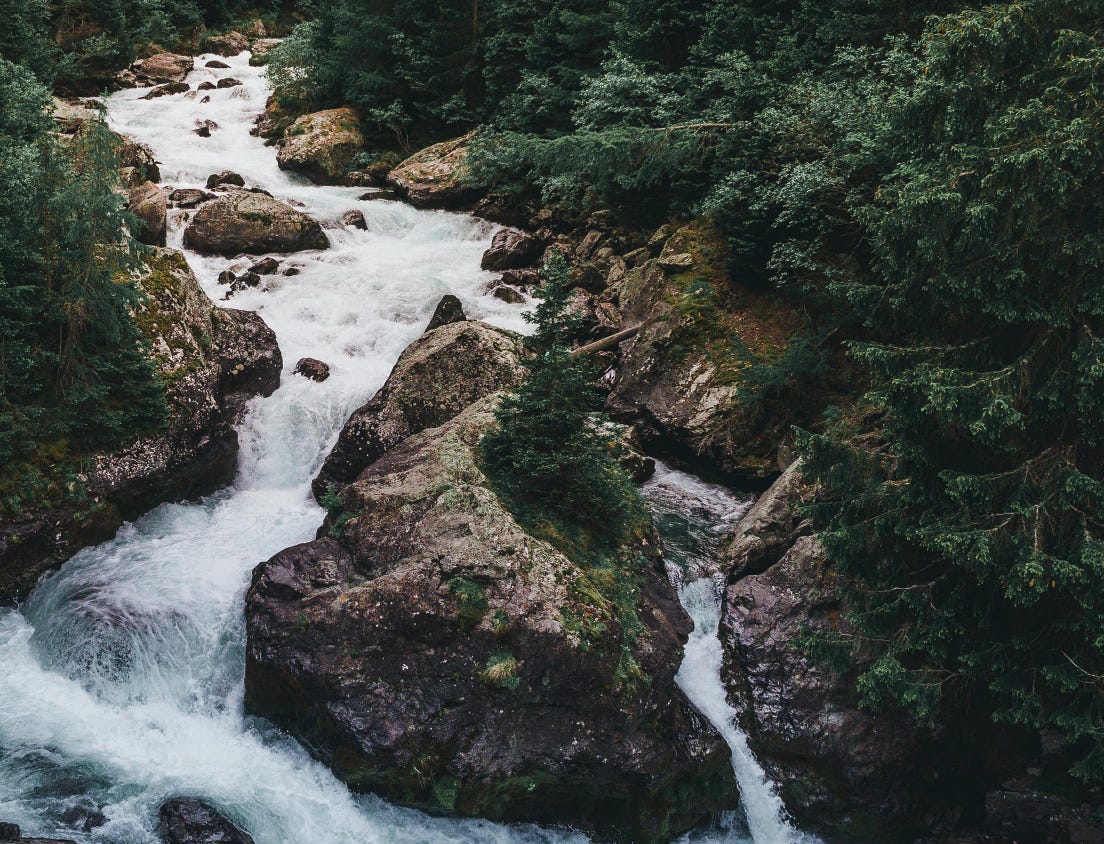
The image was of a lone pine tree growing out of a rock, separated from everything else by a rushing river. No forest around it. No protective grove. No rich valley soil. Just a single tree, standing there on what looked like a hard, isolated outcropping, alive in a place that did not seem built for life.
And it immediately made me wonder: how did the seed get there?
Maybe a bird dropped it. Maybe the wind carried it. Maybe the river once ran lower and the conditions were different. We can guess, but we do not know. And that is part of the mystery of life. So much of what exists comes into being through a chain of events that no one witnesses and no one can fully explain. We like certainty, but life often begins in obscurity. It starts quietly, improbably, and without announcement.
Then came the second question. How is it growing there?
From the image, it looked as though the soil, if there was any at all, could not have been very deep. The roots must have had to work their way into cracks in the rock, searching, straining, adapting, finding moisture where there should have been almost none. That tree was not growing because conditions were ideal. It was growing because life has a way of pressing forward even when the conditions are not welcoming.
That made me think of Nietzsche, who wrote about the will to power, not merely as domination, but as the force of life pushing outward, becoming, overcoming, striving. We tend to think of strength as comfort, support, and safety. But often strength is forged where there is very little comfort at all. Often the strongest things are not those that were sheltered, but those that had to claw their way into existence.
It also made me think of the Stoics. Marcus Aurelius reminded himself that the obstacle is not something separate from the path, it is the path. The tree does not complain that it was not planted in a meadow. It does not curse the rock, resent the river, or wish to be somewhere else. It simply does what living things do when they are determined to live. It reaches downward. It reaches upward. It endures. It becomes what it can become with what it has been given.
And maybe that is where the deeper lesson is.
We often talk about resilience as the ability to bounce back, to absorb hardship and remain standing. That matters. But maybe that tree points us toward something more than resilience. Maybe it points us toward antifragility, the idea that some things do not merely survive stress but are shaped and strengthened by it. The wind forces the roots deeper. The rock forces them to become more deliberate. The exposure forces the tree to become stronger than it might have been in an easier place.
That does not mean hardship is good in itself. It means hardship can reveal what was already possible within us.
There is also something deeply human in the loneliness of that tree. It stands there without the protection of others, exposed to weather, water, and time. There is no wall around it. No crowd to hide in. No guarantee of comfort. Just a quiet, stubborn existence. And in that image, I was reminded of what it means to stand on your own when you have to.
Not everyone gets to grow in ideal conditions. Some people are planted in difficult soil from the start. Some have to learn to live without the shelter others take for granted. Some find themselves isolated, battered by currents they did not choose. Yet there they are, still growing, still holding on, still becoming.
Sartre might say that existence precedes essence, that we are not handed a fixed meaning but must create one in the circumstances where we find ourselves. That pine tree, in its own silent way, seems to say the same thing. It does not wait for permission to exist. It does not require ideal conditions to justify its growth. It grows because that is what living things do when they refuse to surrender.
And maybe that is the lesson I took from that image.
Life wants to live. It strains toward being. It resists disappearance. It does not easily agree to fade into nothing. There is something in creation itself that pushes back against emptiness. The tree on the rock is a witness to that. It should not be there, and yet there it is. It should not be thriving, and yet there it stands. Exposed, alone, rooted in stone, surrounded by rushing water, and still alive.
There are days when we feel like that tree. Isolated. Pressed. Unsupported. Stuck in conditions we would never have chosen for ourselves. Days when the ground feels thin and the current feels strong. Days when survival itself feels like an act of defiance.
But perhaps that is exactly the point.
If that tree can grow there, so can you.
Not because life is easy. Not because you are protected from the storm. Not because the conditions are fair. But because there is something in you that knows how to reach into the cracks, draw strength from unlikely places, and keep becoming.
Sometimes the most powerful sermon is not preached in a church, classroom, or boardroom.
Sometimes it appears on your computer screen on a random weekday morning, in the image of a lone tree on a rock, reminding you that strength is not always loud, community is not always near, and life, when it chooses to hold on, can do remarkable things.