
Static and Stillness: Why Ham Radio and Philosophy Speak the Same Language

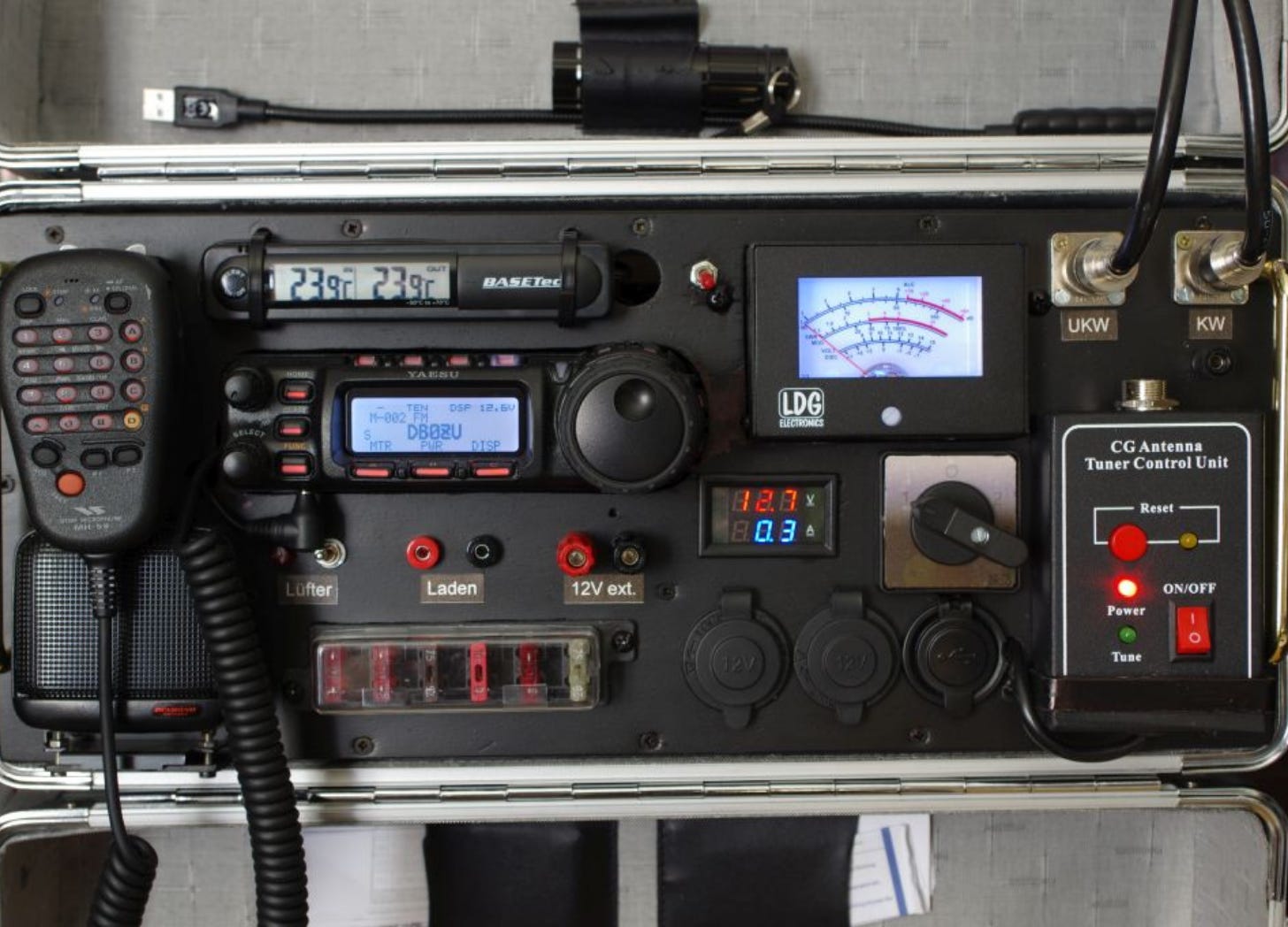
I like HAM radio for the same reason I like philosophy, and I don’t think that’s an accident. Both make you slow down. Both remind you that the world is bigger than whatever is blinking on your phone at the moment. And both quietly insist that thinking and listening still matter.
HAM radio is one of the last places where technology hasn’t completely erased the human voice. It crackles. It fades in and out. Sometimes you hear more static than words. But when you do make contact, it feels earned. You didn’t just tap a screen. You tuned. You waited. You adjusted. You paid attention. There’s something deeply honest about that. Communication isn’t automatic. It’s work. And sometimes it doesn’t work at all. That feels closer to real life than anything on social media.
Philosophy works the same way. It doesn’t give you instant answers. It doesn’t reward speed. It rewards patience. It rewards discomfort. It asks you to sit with questions that don’t resolve neatly. Most people don’t like that. We want clarity. We want certainty. We want the answer now. Philosophy says, “Slow down. Think. Listen. You might not like what you find.”
In HAM radio, you learn very quickly that control is an illusion. The atmosphere decides a lot. Solar activity decides a lot. Geography decides a lot. You can prepare, but you can’t command. Philosophy teaches the same lesson. You can build frameworks. You can study ethics, logic, metaphysics, and politics. But at the end of the day, life still surprises you. Reality still resists being boxed in. Wisdom is learning how to operate inside that uncertainty without panicking.
I also like that both ham radio and philosophy are quietly rebellious. In a world obsessed with speed and efficiency, they are unapologetically slow. They don’t scale well. They don’t monetize easily. They exist because people care, not because they’re profitable. That alone makes them worth protecting.
HAM radio connects strangers who will never meet, who don’t agree on politics, religion, or much of anything else, but who share a moment of cooperation. “Can you hear me?” is a philosophical question disguised as a technical one. It asks about existence, perception, and connection simultaneously. Sometimes the answer is no. Sometimes the answer is barely. Sometimes it’s loud and clear. That feels like a metaphor someone would charge tuition to explain.
Philosophy, at its best, is the same kind of signal searching. We tune our thinking. We test ideas. We adjust assumptions. We try to make sense of the noise. And every once in a while, we hear something that cuts through clearly enough to change how we see the world.
I think that’s why I like both. They remind me that clarity is rare, connection is fragile, and attention is a form of respect. They both ask you to show up with humility. You’re not in charge of the universe. You’re just trying to understand a small part of it, one transmission at a time.
And in a world that keeps getting louder and faster, I find something comforting about two pursuits that still whisper, “Slow down. Listen carefully. This matters.”